Bill on real runtime
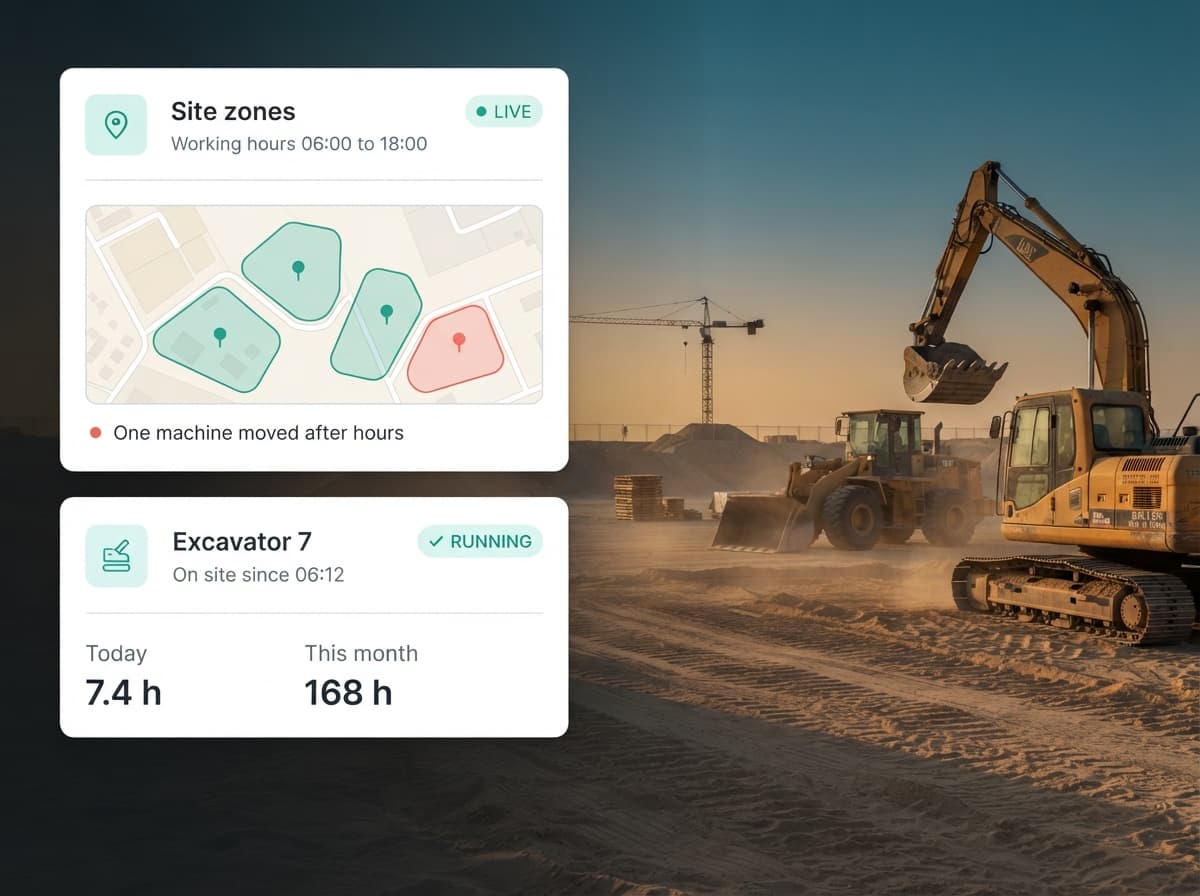
Wired trackers capture ignition and true engine hours per machine, so hire billing and utilisation planning stop depending on a logbook estimate.
Industry
Machines move between sites, run without anyone recording it, and get billed on estimates. We track where every unit is, how many hours it actually ran, and when it is due for service — across every site you operate, including the plant you hire out.
Why it fits
What changes when plant, site, and crew data land in the same place.
Wired trackers capture ignition and true engine hours per machine, so hire billing and utilisation planning stop depending on a logbook estimate.
Maintenance intervals key off actual usage rather than the calendar, which turns downtime into something you schedule instead of something that happens to you.
Powered machines take wired units, unpowered assets take long-life battery tags, and both appear in the same inventory on the same map.
Site geofences with working-hours rules flag after-hours movement while the machine is still close enough to recover.
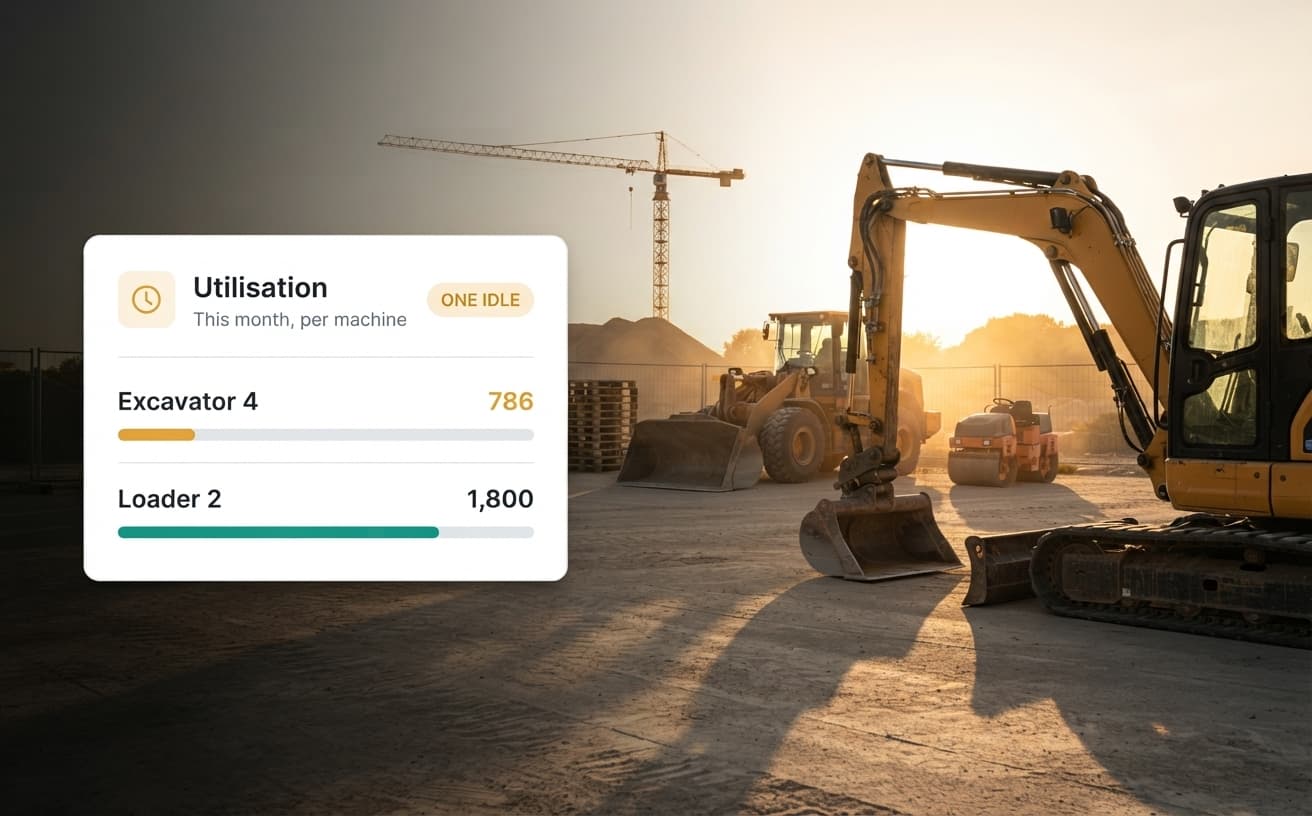
Utilisation
Fleets grow because nobody can prove the existing units are idle. Runtime and utilisation per machine, per site, shows exactly what sits unused and where — so the next job gets covered by redeploying rather than by hiring in.
Learn more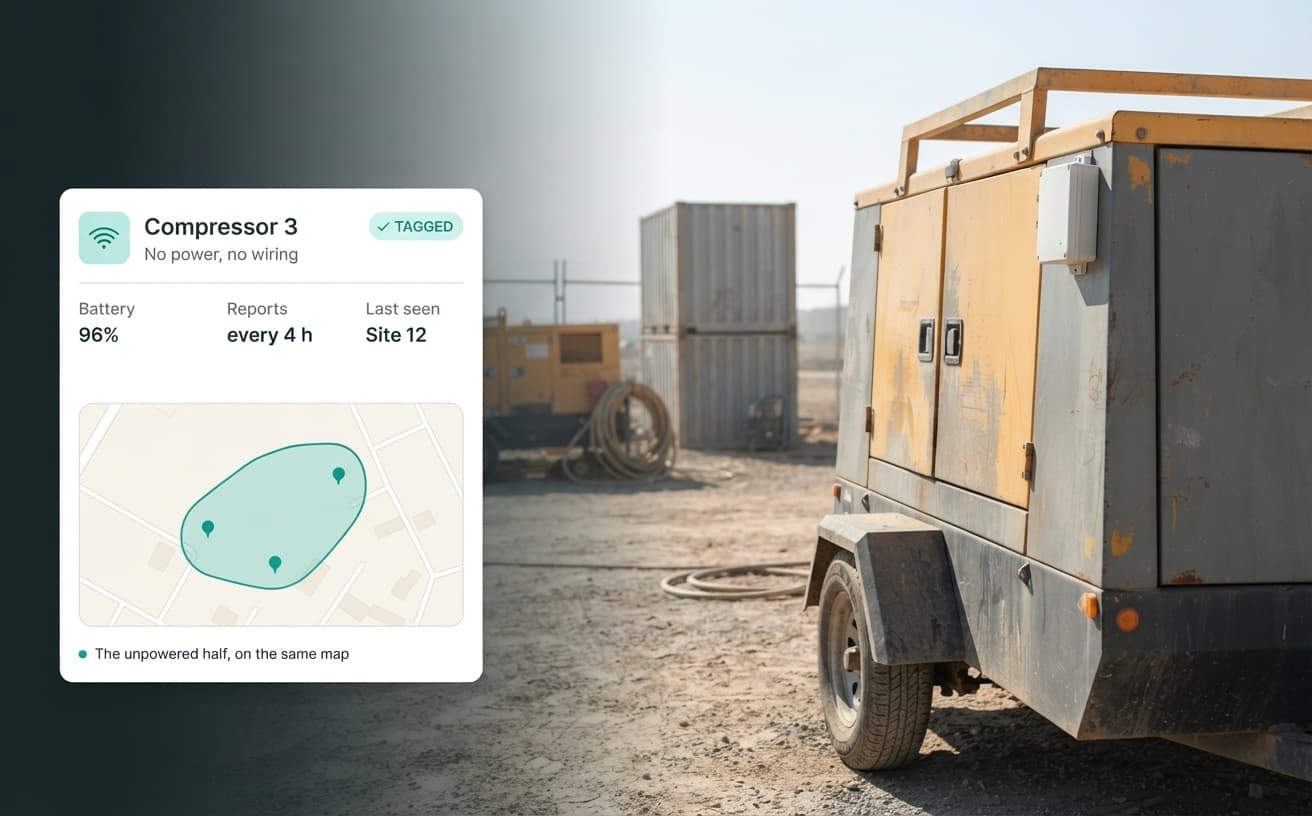
Assets
Generators, compressors, trailers, and containers have no power source to wire into. Battery tags fix on without an installation truck-roll and report for months, putting the unpowered half of your inventory onto the same live canvas as the machines.
Learn more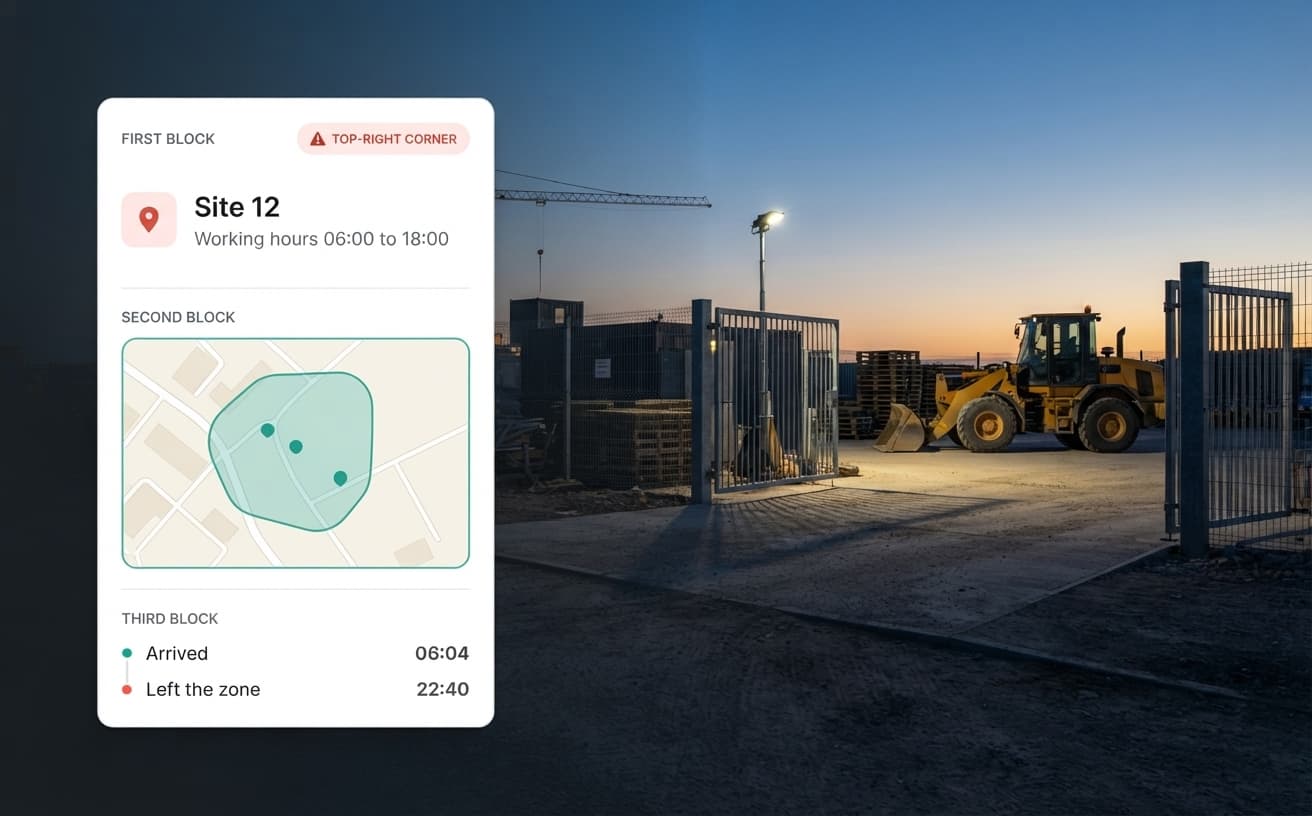
Site discipline
Draw the site once and it becomes a live boundary with working-hours rules. Arrival, departure, unauthorised relocation, and out-of-hours movement raise events with position attached, rather than being discovered at the next stock check.
Learn more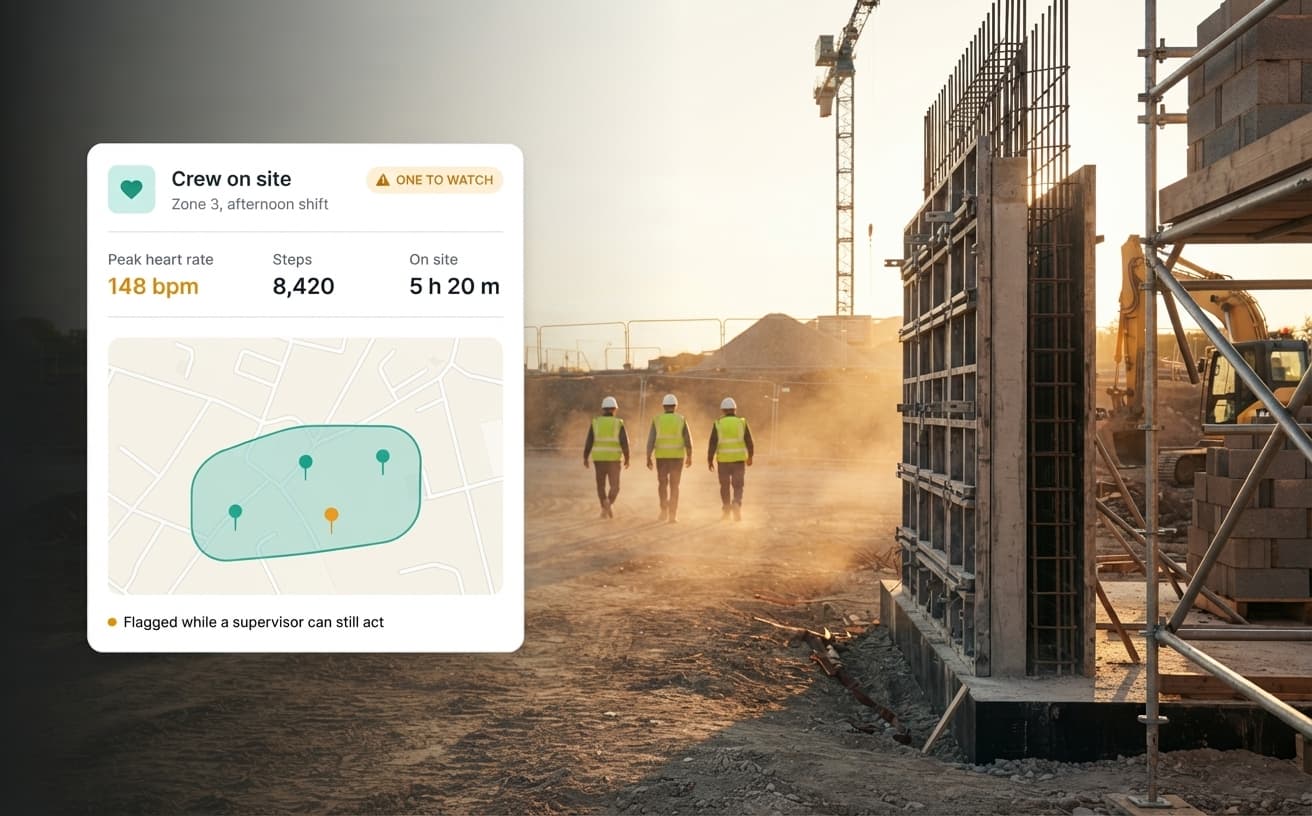
Crew safety
A site in summer is a health risk before it is a productivity problem. Crew smartwatches stream heart rate and movement beside the wearer's position, so a reading that climbs and stays high through the afternoon is visible while a supervisor can still act on it — and every worker sits on the same site map as the machines.
Learn moreOperating realities
Why construction breaks fleet software that works fine elsewhere.
01
Machines are hired in, hired out, moved between sites, and sold mid-project. An inventory model that assumes a stable fleet is wrong within a month.
02
Attachments, containers, and generators cannot host a wired tracker, so any honest picture of site inventory needs battery-tag coverage as a first-class case.
03
Geofences have to be quick to draw and quick to retire, because a site that exists for eleven weeks will not justify a configuration project.
04
When invoices are built from engine hours, an approximate hour count is a commercial problem rather than a reporting inconvenience.
Products
Every capability below ships in the same portal, the same mobile app, and the same live data pipeline as the rest of your operation.
Runtime, location, and service health for heavy machinery.
See detailsBattery tags for trailers, containers, and unpowered plant.
See detailsSite boundaries with working-hours and movement rules.
See detailsUsage-driven service windows instead of calendar guesses.
See detailsIdle hotspots and consumption rankings per machine.
See detailsJob photos and zone-verified arrival captured in the field.
See details
Discuss your deployment
Sovereign-data-friendly. Enterprise multi-org architecture. Built to integrate with the devices, SIM providers, and back-office systems you already run.