Temperature, continuously
Readings stream around the clock rather than being sampled at handover, so a failing unit is a maintenance job instead of a spoiled load.
Industry
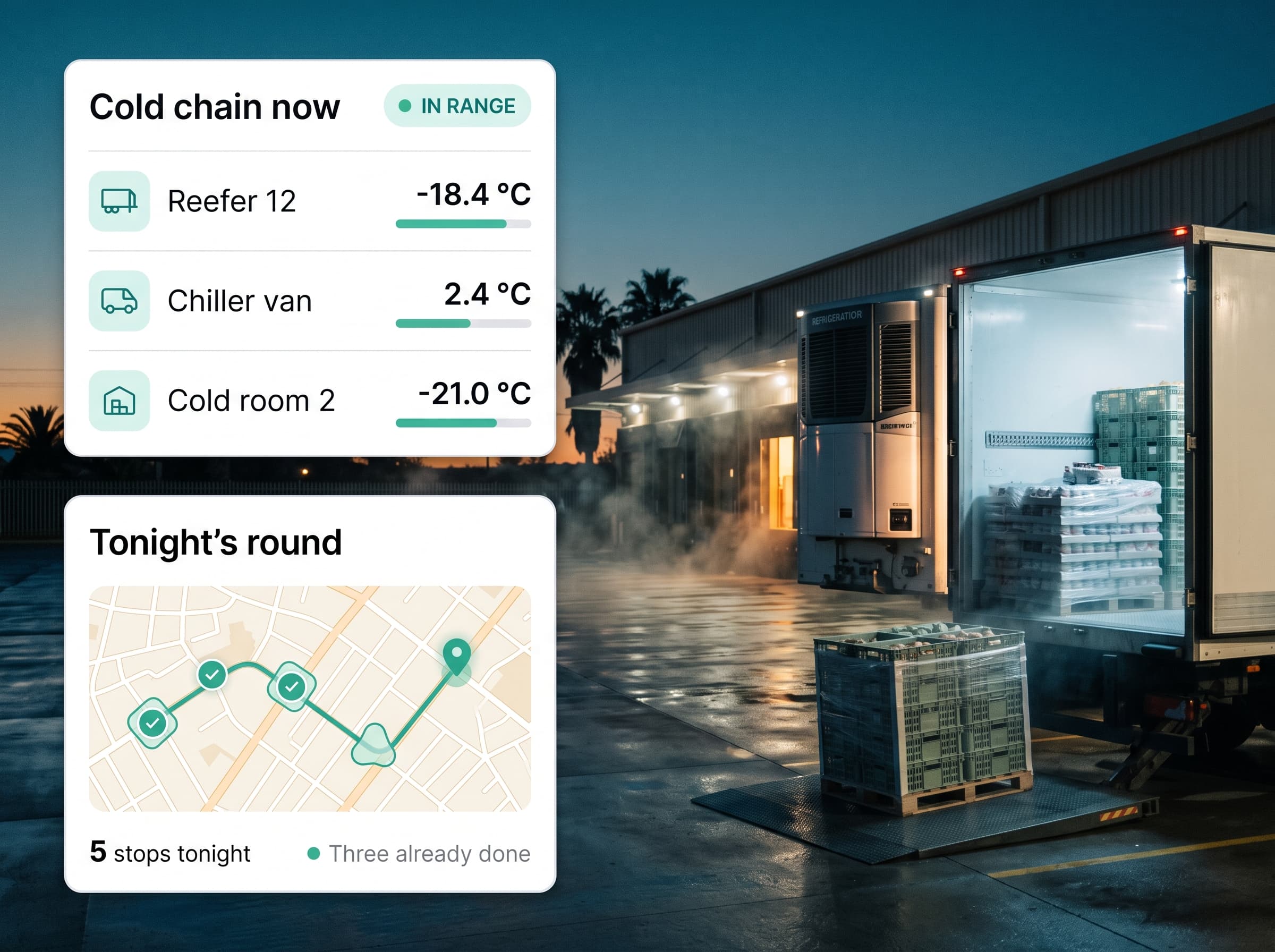
A warming load is only a write-off if you find out at delivery. Temperature probes in reefers, chilled vans, and cold rooms stream into the same platform as vehicle position — so you catch the excursion while the product can still be saved, and prove the chain held when a customer asks.
Why it fits
Four reasons cold chain and telematics belong on one platform.
Readings stream around the clock rather than being sampled at handover, so a failing unit is a maintenance job instead of a spoiled load.
Thresholds set per cargo profile trigger the moment a unit drifts, leaving time to dispatch a repair, divert the load, or move product.
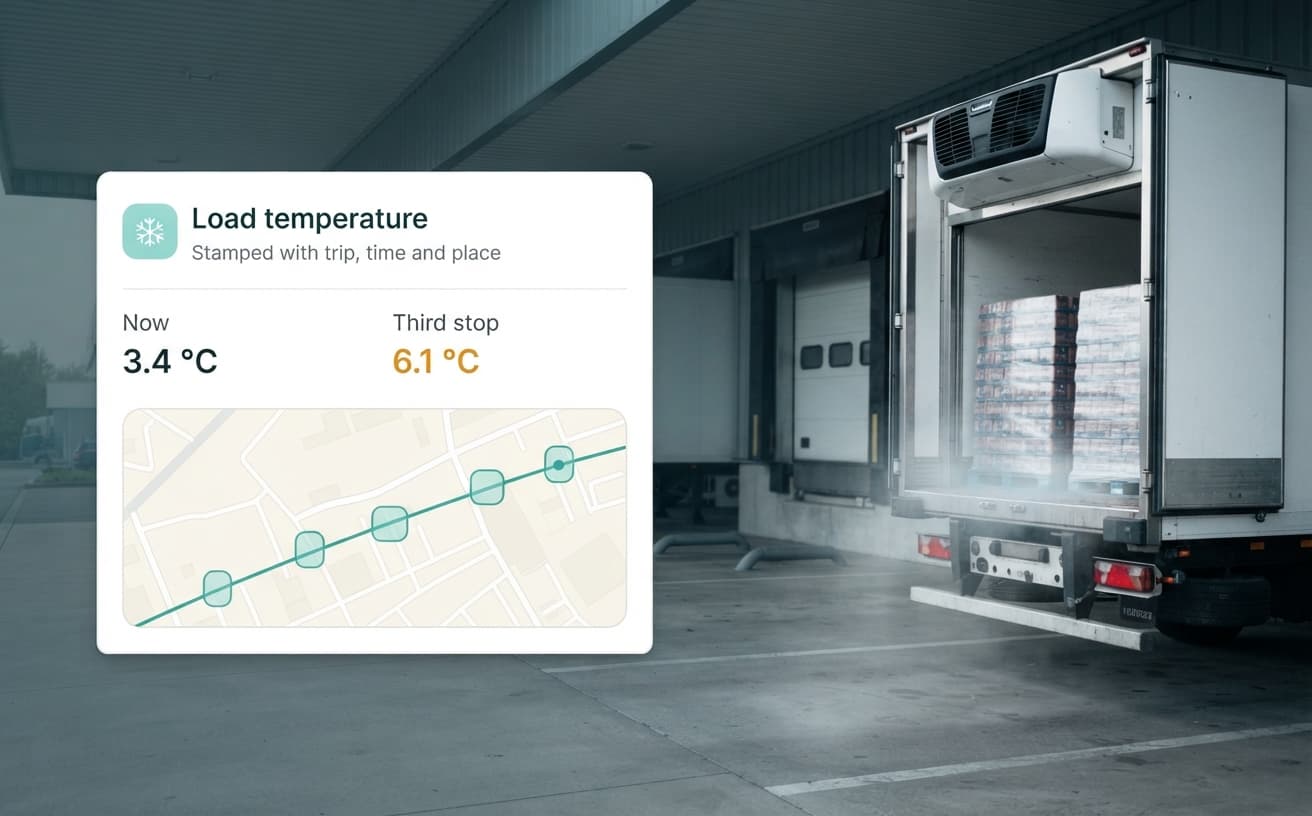
Every reading is stamped with trip, time, and location, so an excursion traces back to the long door-open at the third stop rather than staying a mystery.
Per-trip temperature histories export in one click for customer proof and food-safety audits, drawn from the record that ran the delivery.
Cold chain
Probes in reefer trailers, chilled vans, and cold rooms stream continuously beside GPS position, and every reading is stamped with trip, time, and place. Thresholds set per cargo profile fire the moment a unit drifts, and the per-trip history exports in one click — so an excursion is traced to the long door-open at the third stop instead of staying a mystery.
Learn more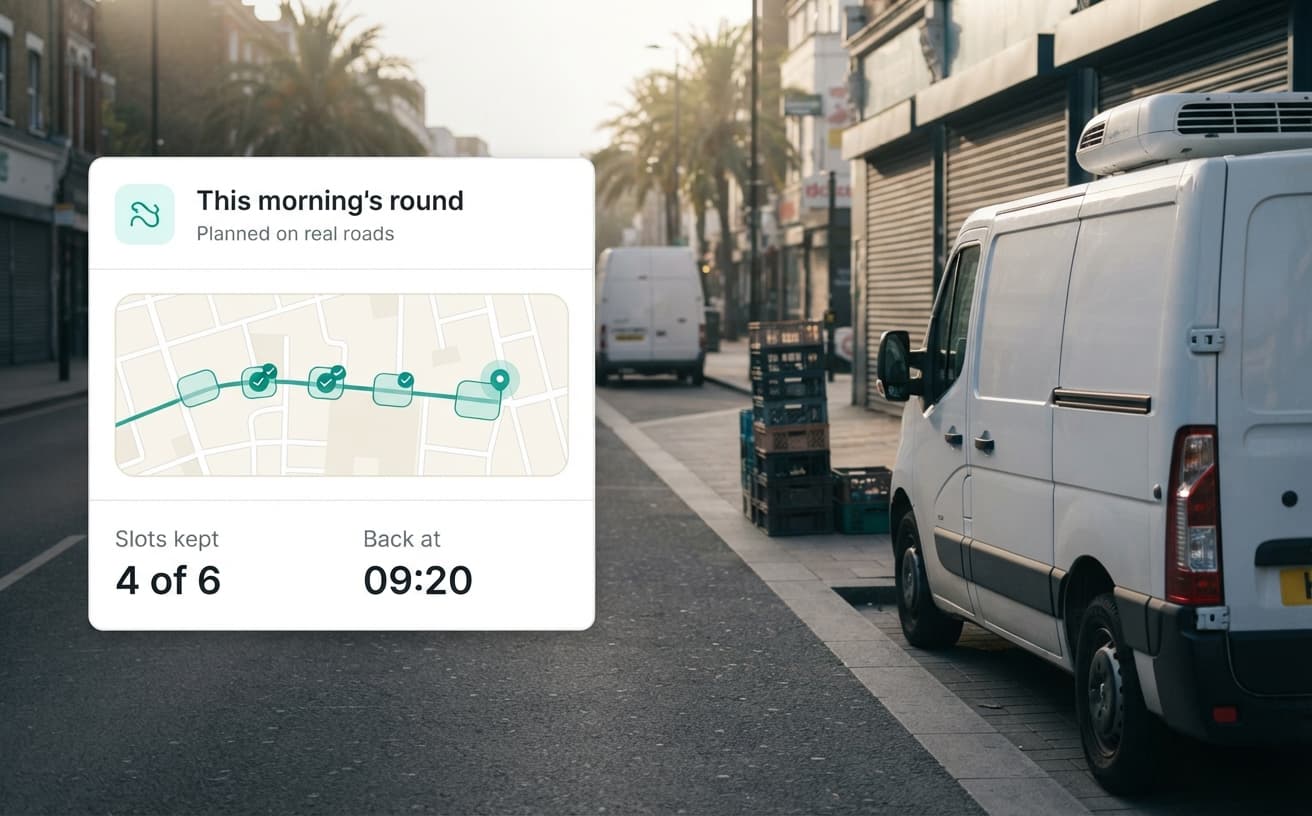
Delivery windows
Grocery and hospitality slots are tight and penalised. The round is planned on the real road graph — or imported whole by KML — and then grades itself as it runs: arrival and dwell at each stop come from zone crossings, the driven track lays over the plan, and the completion estimate slides the moment a delay starts. The depot knows the window is at risk before the customer does.
Learn more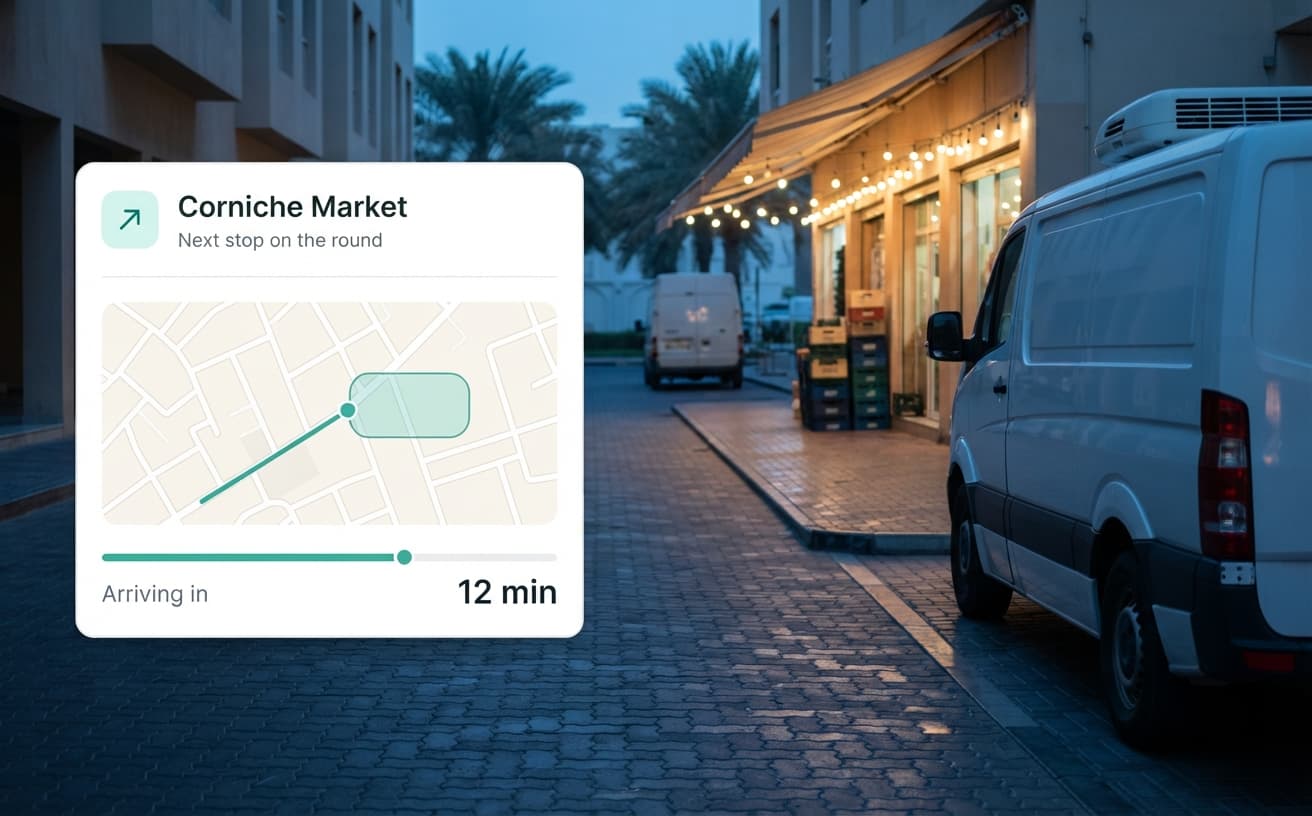
Handover
The delivery point is itself a geofence, so arrival and departure are stamped by the zone rather than claimed by the driver — nobody types where they were. Notes and the completion attach to that same record, and it sits beside the trip's temperature history and, where loads are sealed, the e-lock's access log. A rejected delivery is investigated against one complete record instead of argued over.
Learn moreOperating realities
What makes food distribution unforgiving.
01
Unlike most freight, a delay does not just annoy a customer — it destroys the value of the load, which changes what counts as a timely alert.
02
Frozen, chilled, and ambient loads share vehicles and routes but not thresholds, so alerting has to be per cargo profile rather than per vehicle.
03
Major buyers require documented cold-chain evidence, so the ability to export a clean per-trip history is a commercial requirement, not a reporting feature.
04
A probe that stops reporting reads as 'no alerts'. Sensor health has to travel with the data or you discover the gap at the worst moment.
Products
Every capability below ships in the same portal, the same mobile app, and the same live data pipeline as the rest of your operation.
Live temperature for reefers, chillers, and cold rooms.
See detailsLive GPS, trips, and engine signals across the fleet.
See detailsProtect delivery windows with live ETAs and alerts.
See detailsProof of delivery, navigation, and job updates.
See detailsSeal high-value loads and log every access event.
See detailsTank and silo levels for bulk ingredients.
See detailsImplementations
Solution pages go a level deeper: the contracts, the contractors, the regulator, and the stack assembled to run it.

Discuss your deployment
Sovereign-data-friendly. Enterprise multi-org architecture. Built to integrate with the devices, SIM providers, and back-office systems you already run.