Dispatch on reality
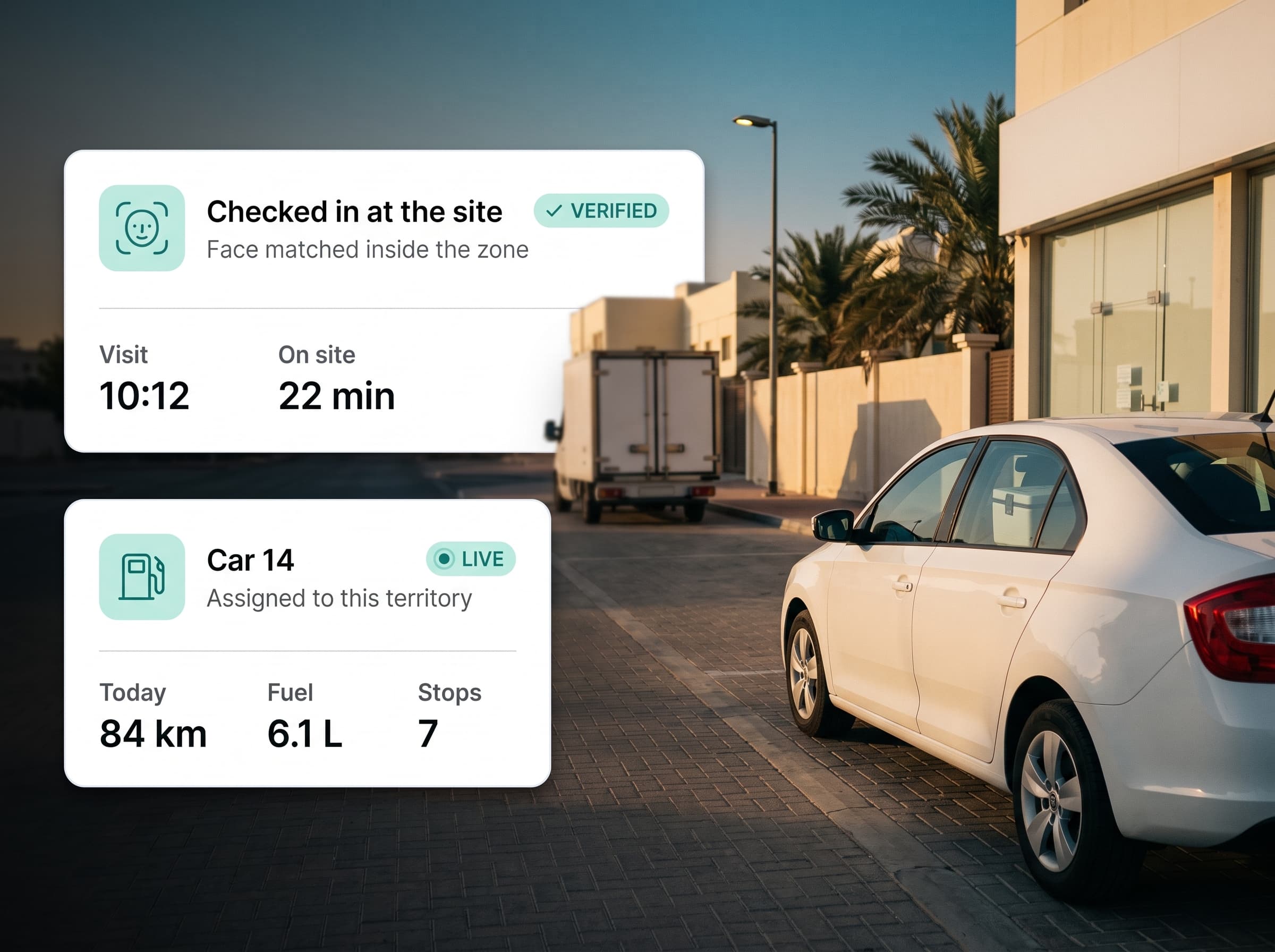
Live status, speed, and ignition mean the closest available vehicle is a fact rather than a guess, and deviation shows up while it can still be corrected.
Industry
Margin in freight is measured in fuel, hours, and the promises you keep. We stream position, engine data, and driver events under a second, then turn that telemetry into trips, fuel estimates, and the fourteen reports your operations and finance teams already ask for — across a network of depots, divisions, and subcontracted carriers.
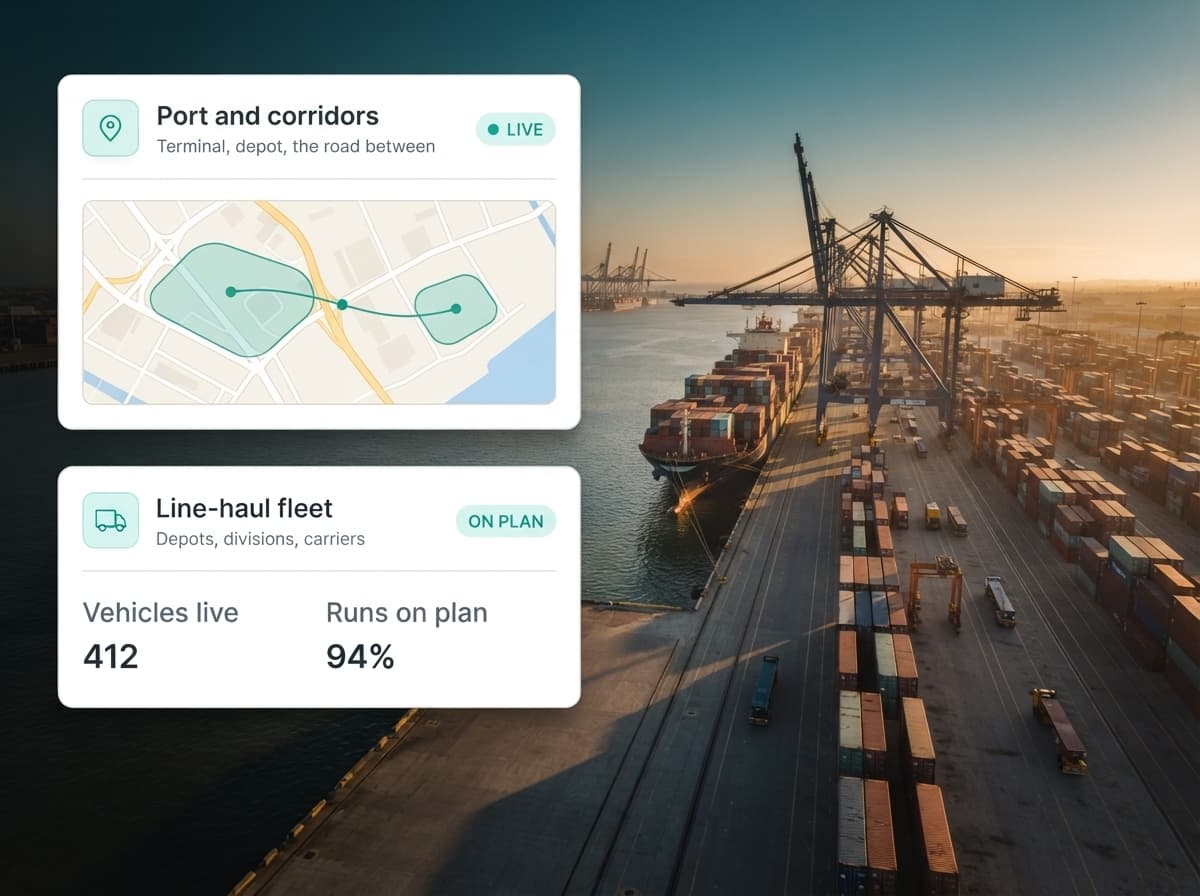
Why it fits
The four numbers a freight operation lives on, on one screen.
Live status, speed, and ignition mean the closest available vehicle is a fact rather than a guess, and deviation shows up while it can still be corrected.
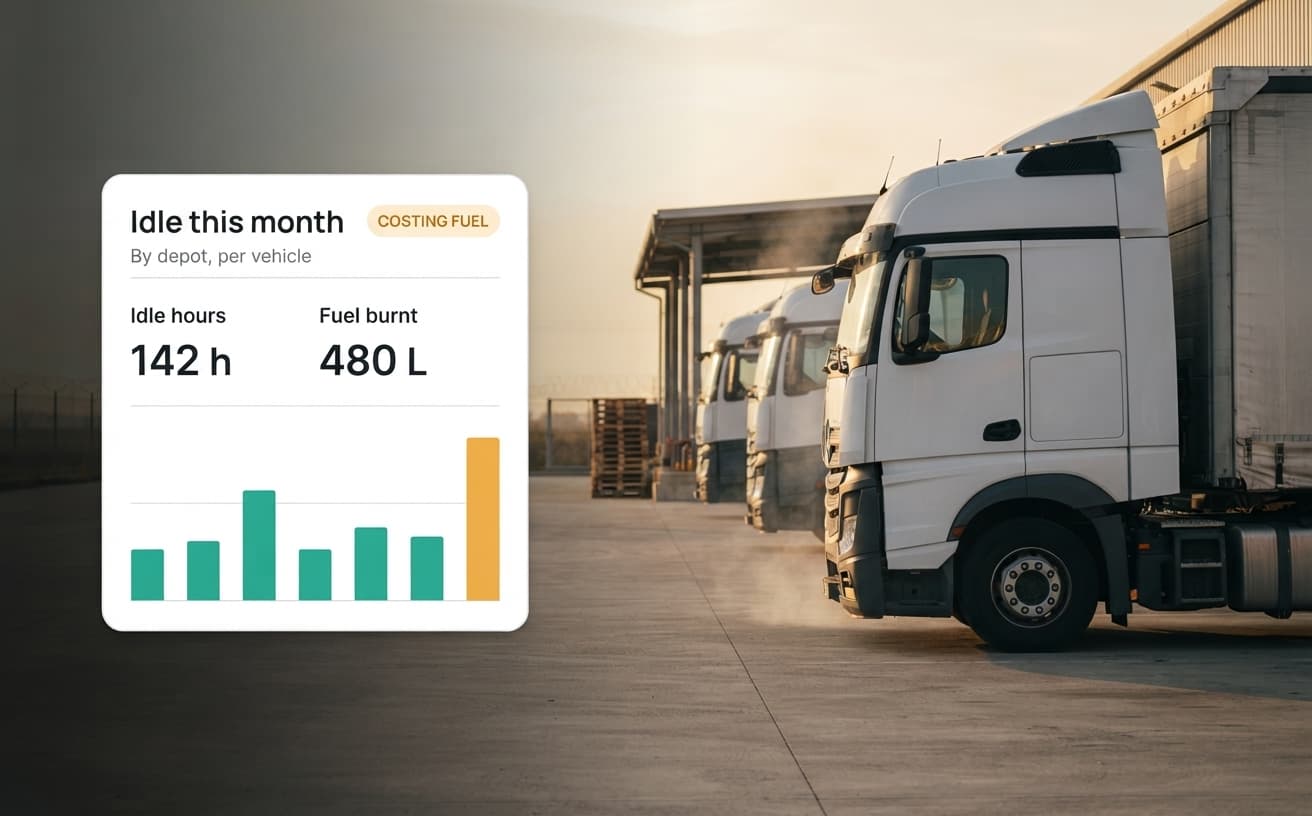
Distance, idle time, traffic, and driving style feed a per-vehicle fuel model, so heavy consumers surface weeks before the invoice confirms them.
Every trip records from ignition to ignition with a replayable GPS trace, which ends missed-delivery and detour arguments in the time it takes to open the journey.
The organisation hierarchy gives each division, depot, and subcontracted carrier a window onto exactly its own vehicles, under your branding, without exposing the rest of the network.
Cost control
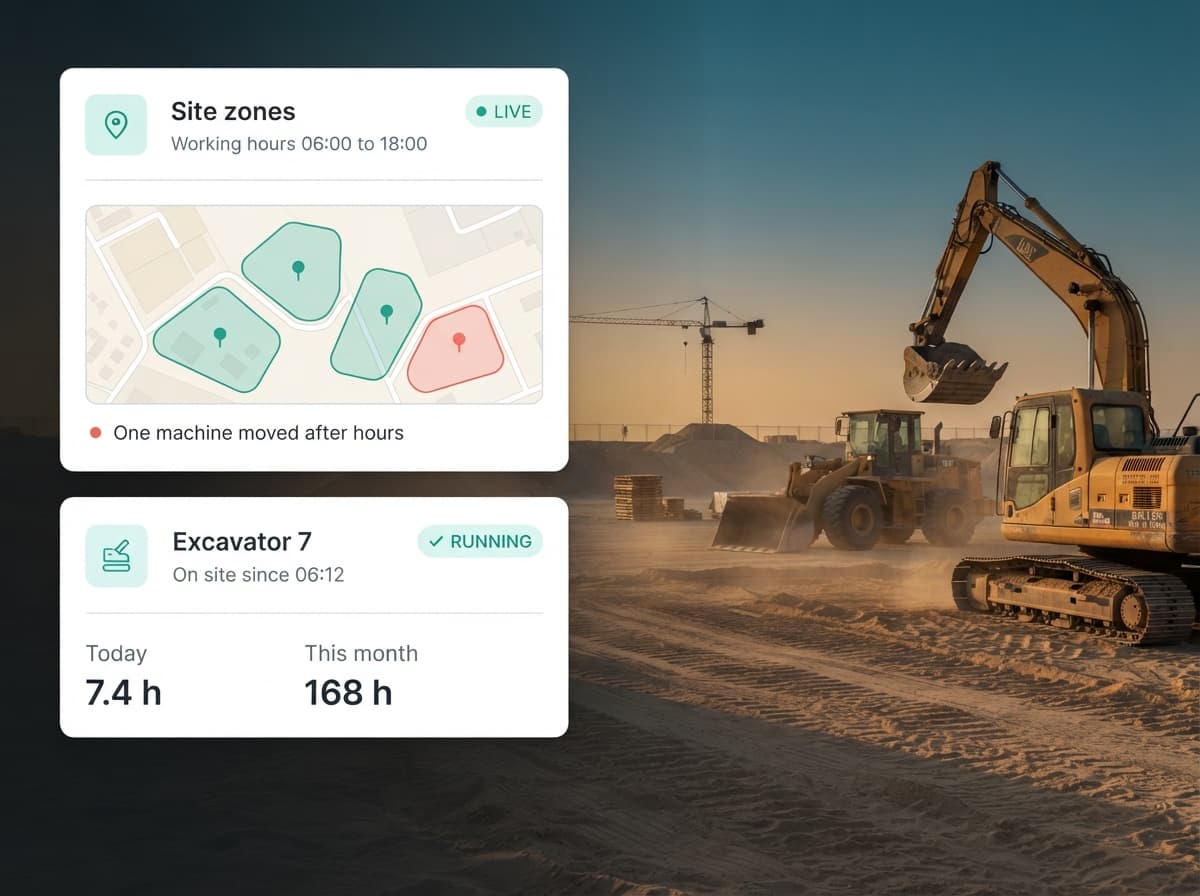
Idle events carry duration, location, and vehicle, so the depot where engines run for twenty minutes before every departure finally appears on a report. League tables by vehicle and driver make the fuel conversation factual rather than personal.
Learn more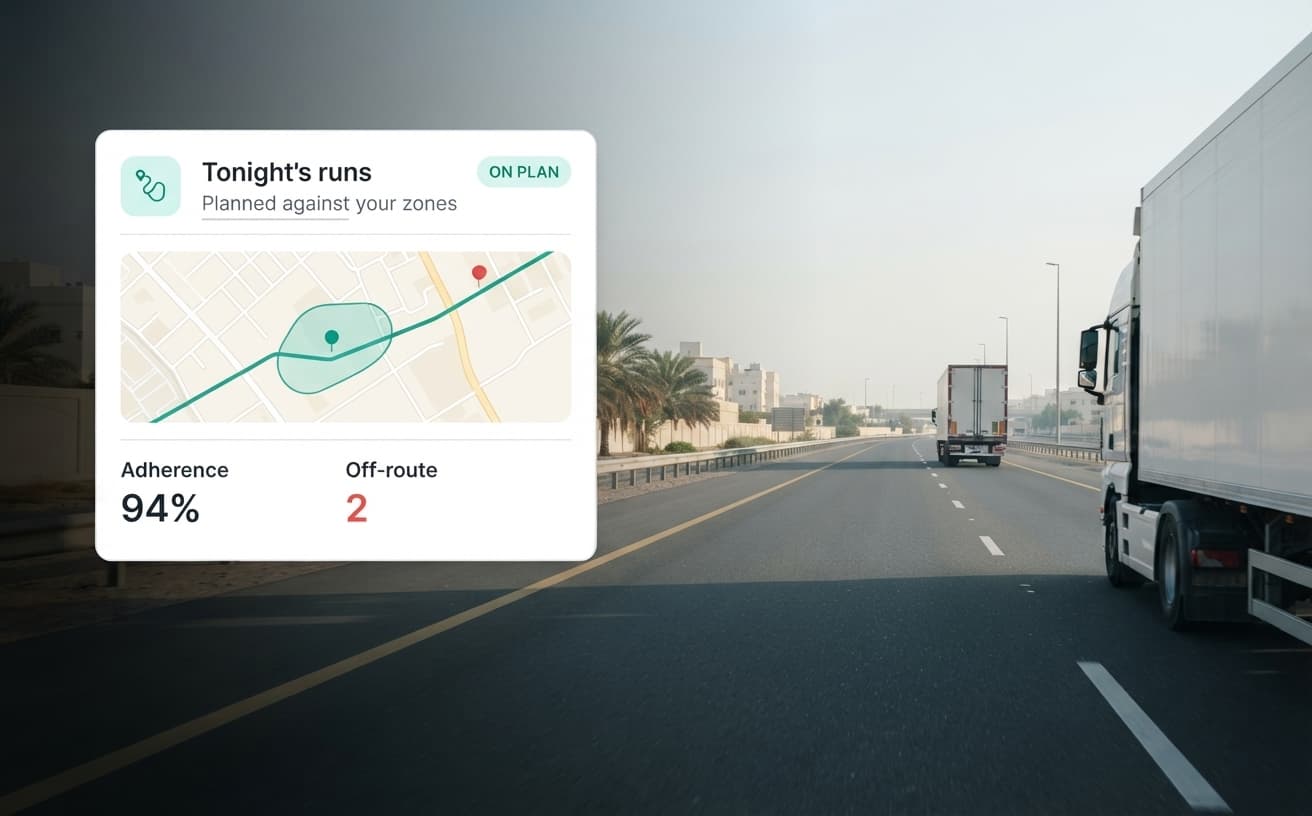
Service promises
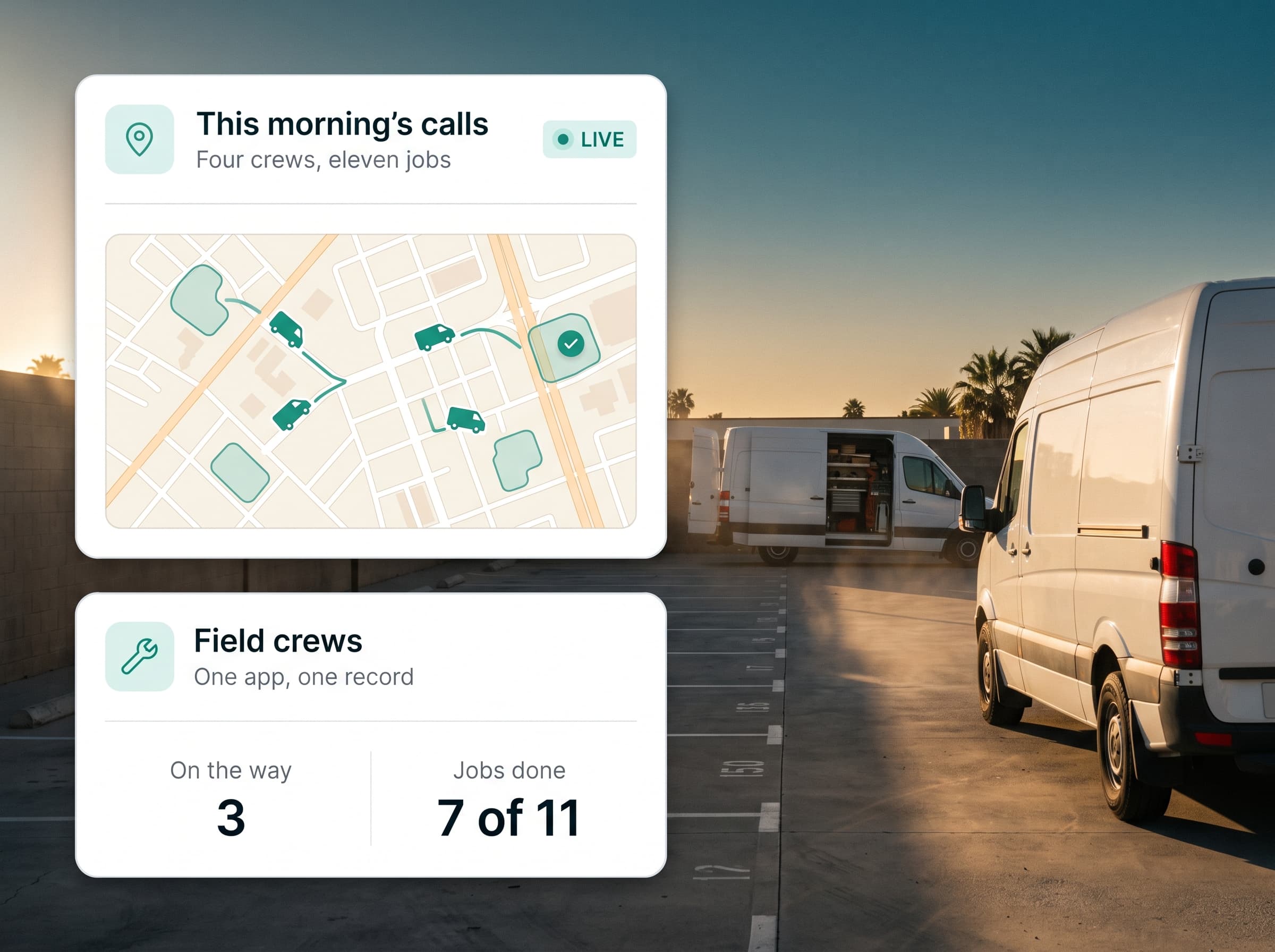
Planned routes live on the map beside your zones — import the existing network by KML or draw new ones — then assign vehicles and watch adherence. Deviation thresholds raise an event the moment a run goes off-route, with time to re-plan.
Learn more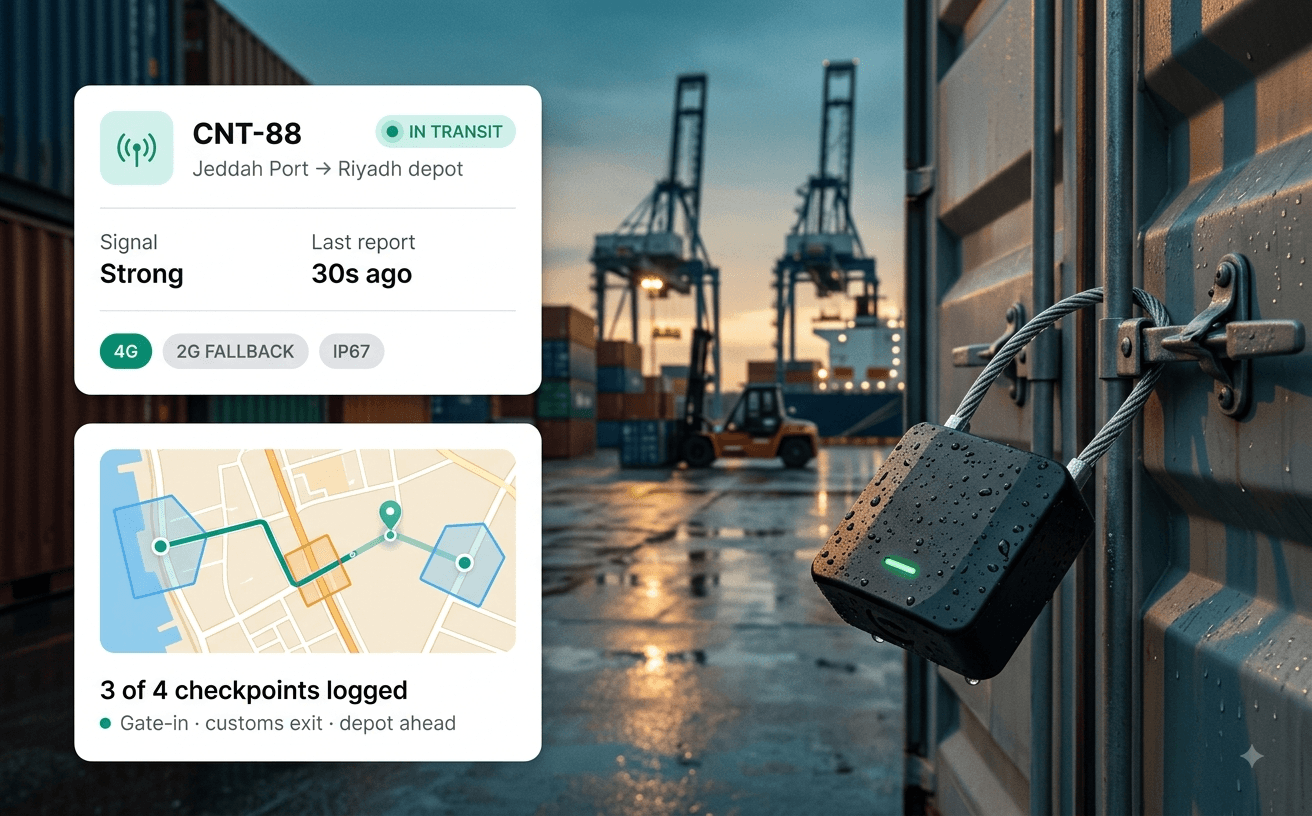
Cargo
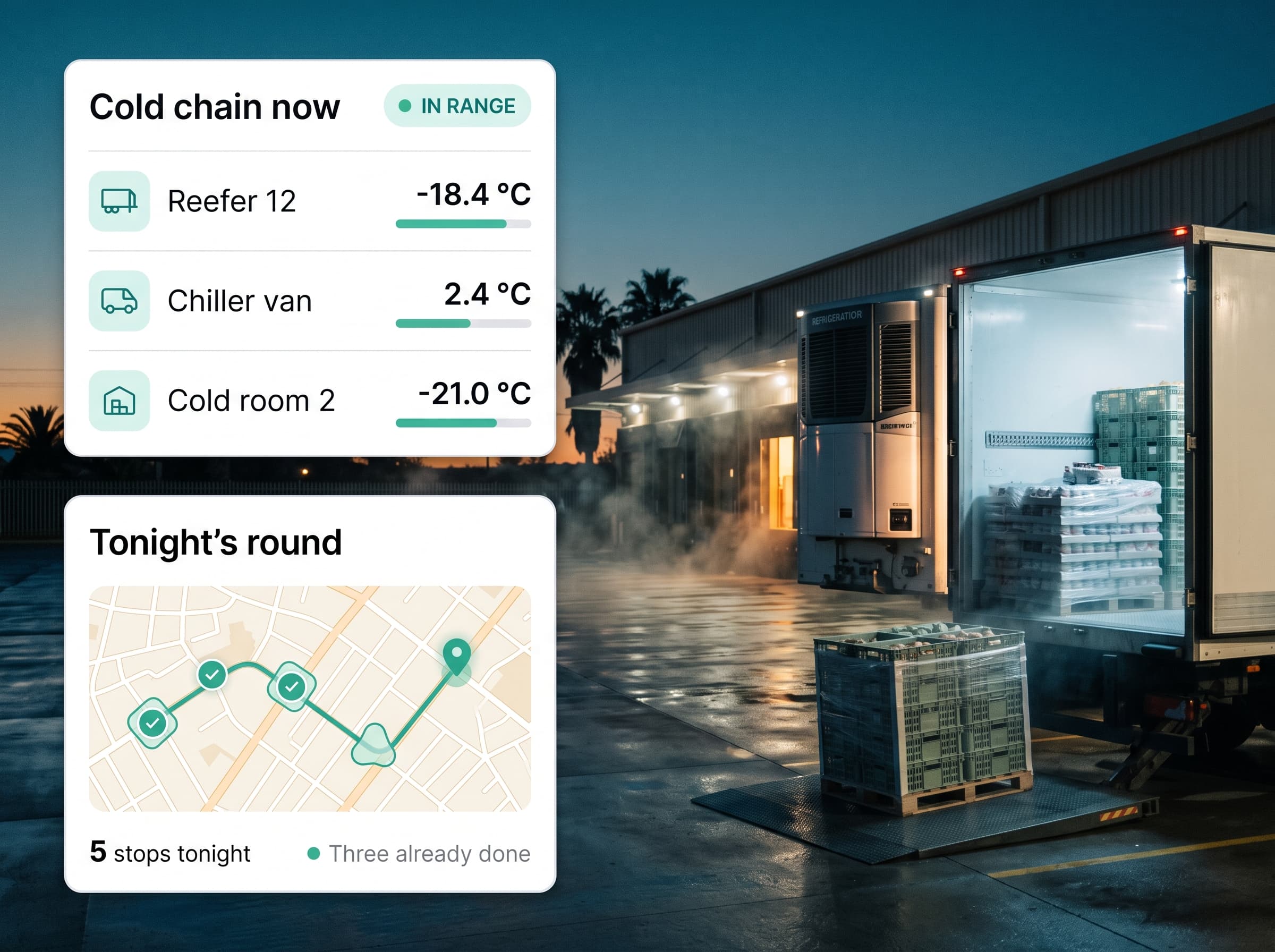
Trailers and containers take battery tags; high-value loads take e-locks that combine GPS with a steel cable on a magnetic mount. Doors open remotely at authorised handovers only, and every access event is logged with position.
Learn moreOperating realities
What freight demands that a generic tracking product does not deliver.
01
Regional offices, depot managers, and subcontracted carriers each need their own slice of the same operation. Without a real hierarchy that means either a spreadsheet emailed daily or a login that shows far too much.
02
A claim about a missed window lands long after the trip. If raw traces are not retained and replayable, the argument is settled by whoever sounds more certain.
03
Small percentage movements are material, so estimates need to be good enough to rank vehicles and reconcile against invoices — not merely indicative.
04
Acquisitions, subcontractors, and old procurement leave a mixed estate. Device-agnostic onboarding is the difference between growing and re-platforming.
Products
Every capability below ships in the same portal, the same mobile app, and the same live data pipeline as the rest of your operation.
Live GPS, trips, and engine signals for every vehicle.
See detailsPlan routes, assign the nearest vehicle, alert on deviation.
See detailsConsumption modelling and idle exposure per vehicle.
See detailsReplayable traces that close route disputes.
See detailsBattery tags for unpowered trailers and containers.
See detailsTrack and physically seal cargo in one device.
See detailsImplementations
Solution pages go a level deeper: the contracts, the contractors, the regulator, and the stack assembled to run it.

Discuss your deployment
Sovereign-data-friendly. Enterprise multi-org architecture. Built to integrate with the devices, SIM providers, and back-office systems you already run.