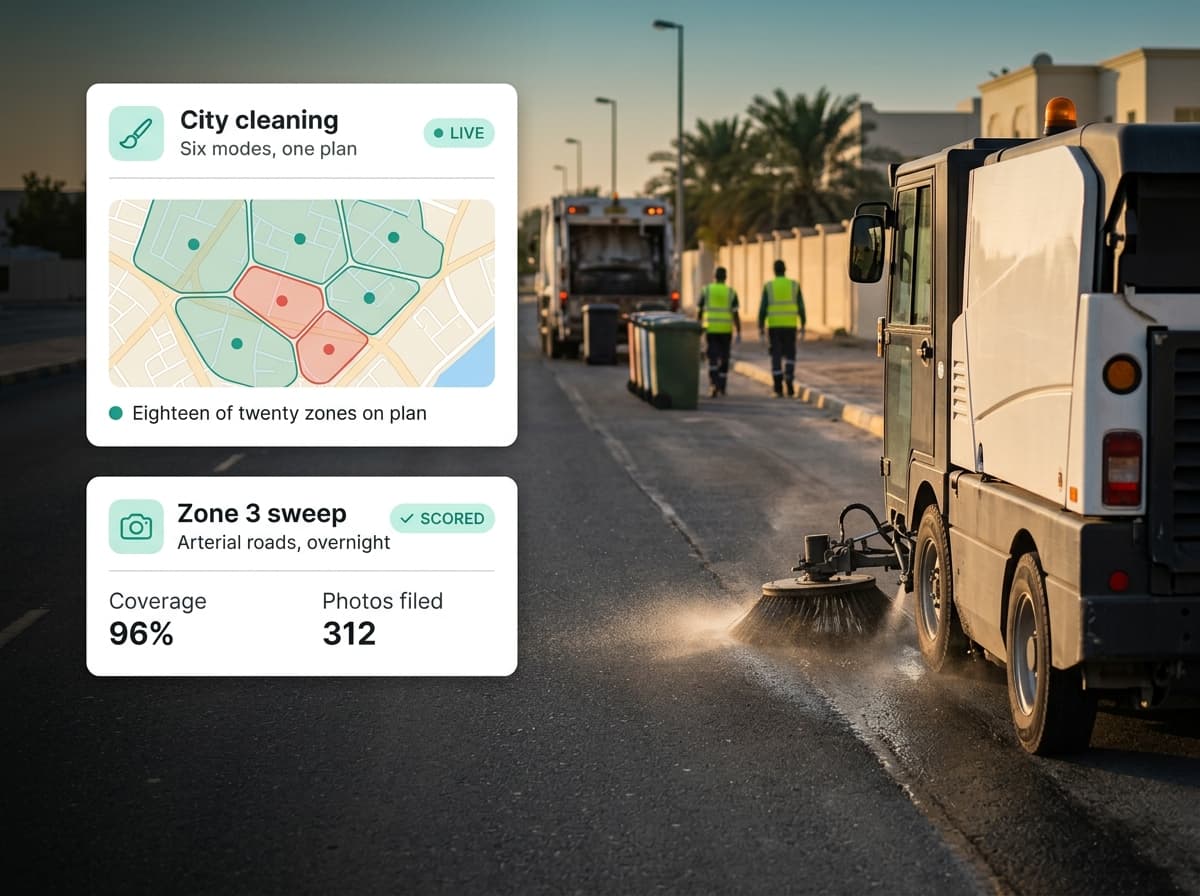
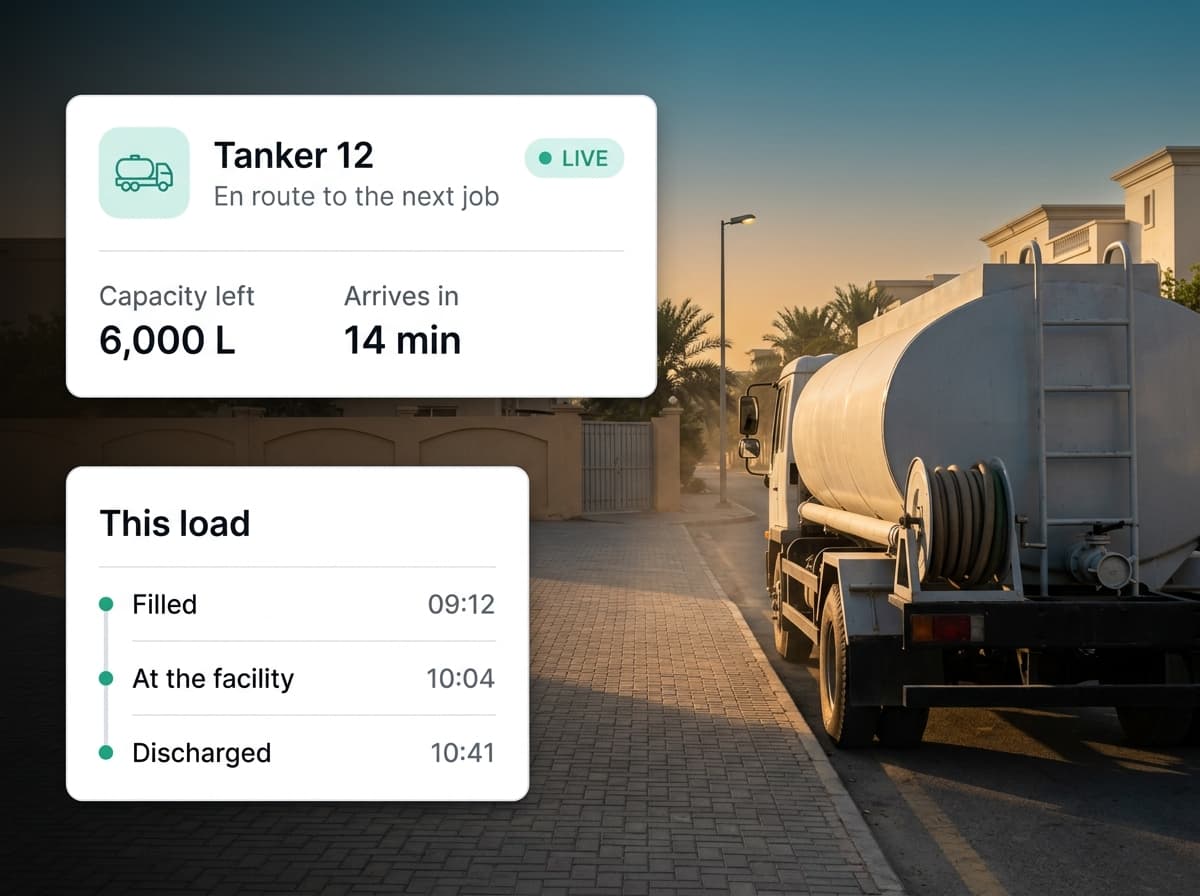
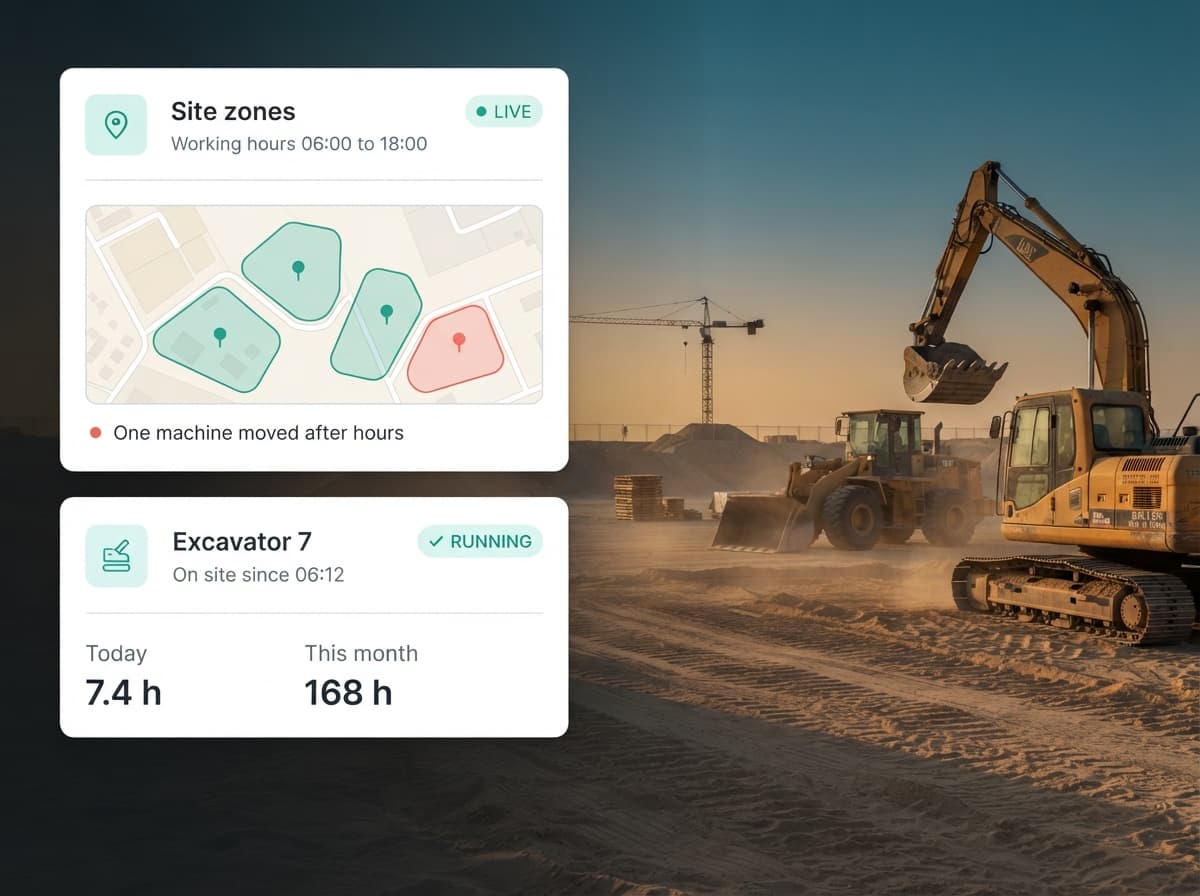
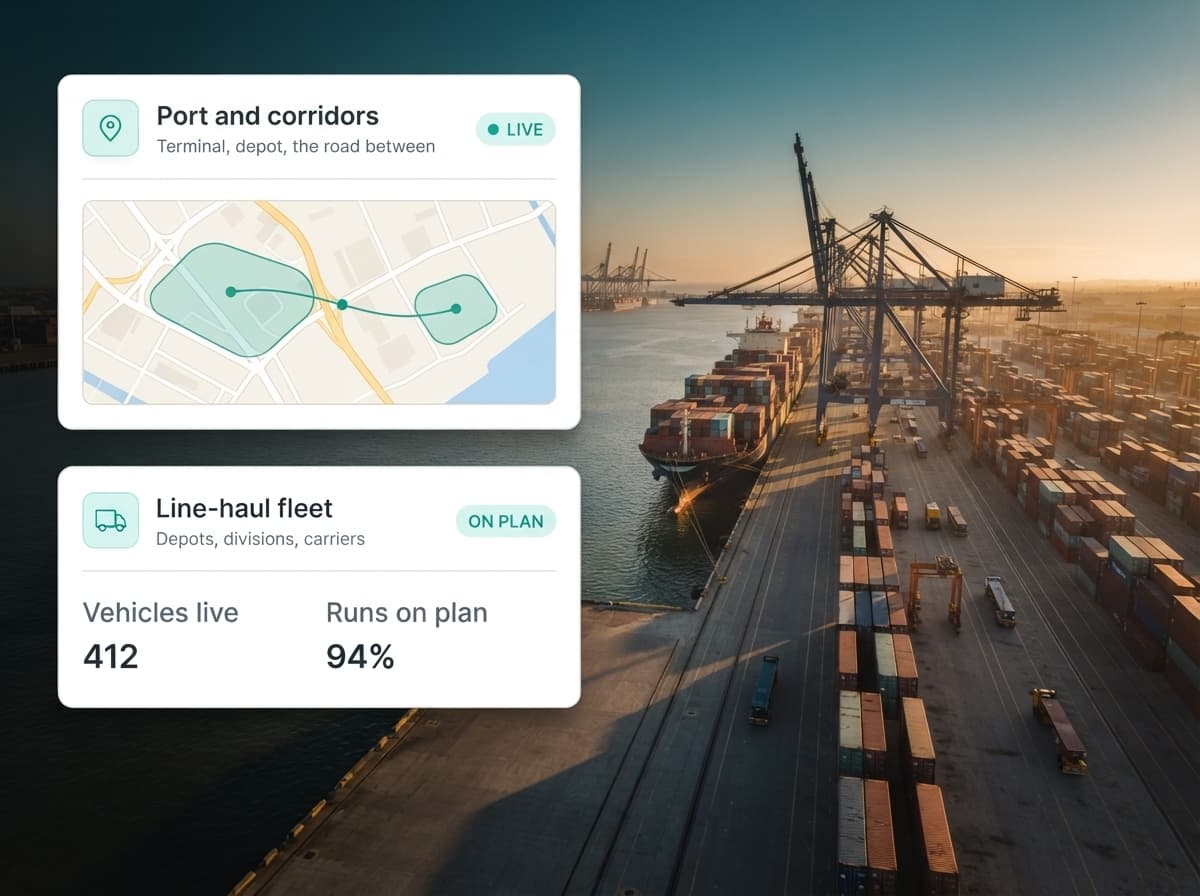
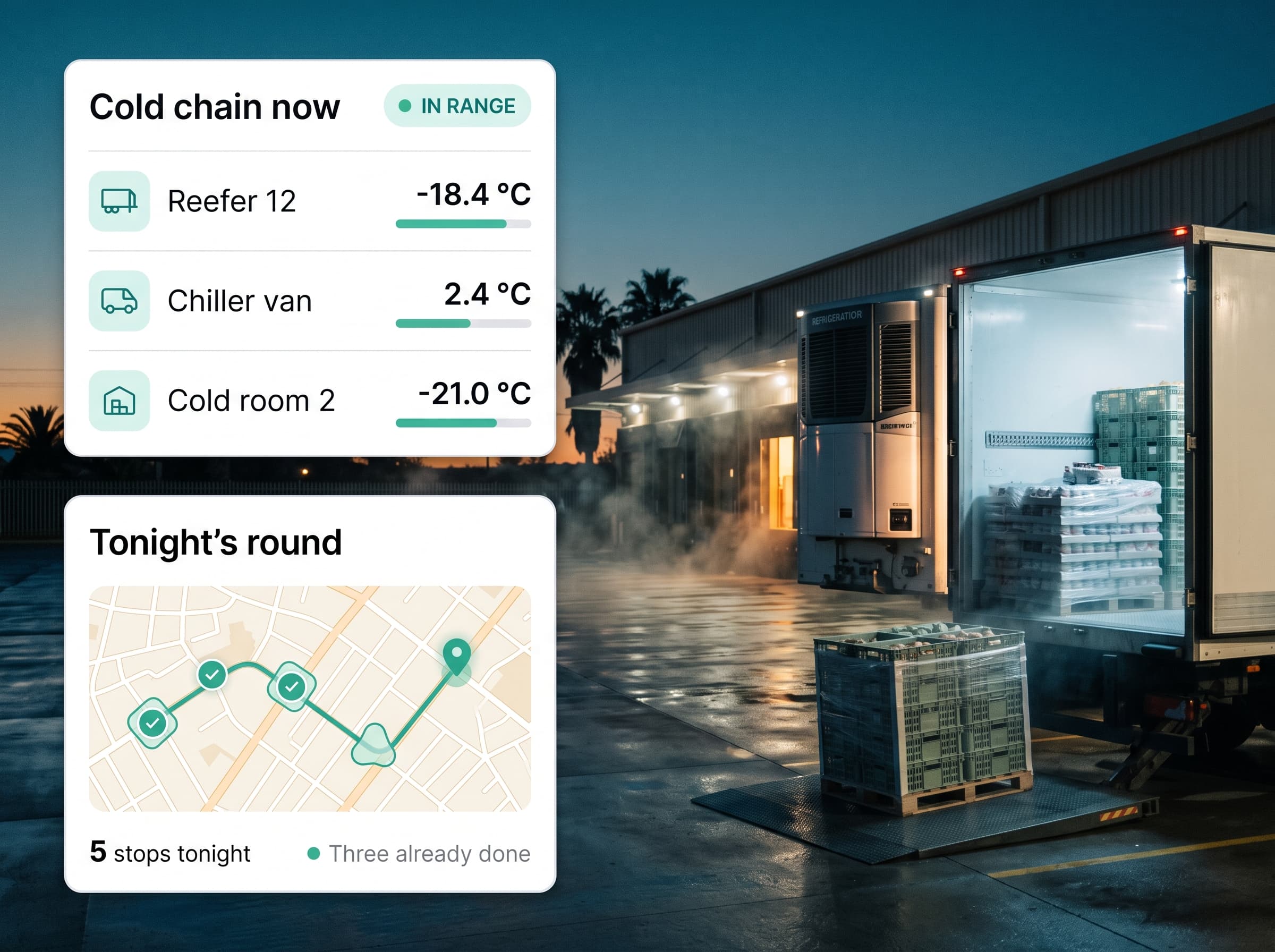
One app the crew opens
Assigned vehicle, today's jobs, navigation, and updates in a single place — adoption comes because it replaces phone calls and paperwork rather than adding to them.
Industry
The gap between the office and the van is where field services lose money — in call-backs, re-typed addresses, paper forms, and jobs nobody can confirm happened. One app closes it: jobs, navigation, checklists, and proof of attendance, filed the moment they're done.
Why it fits
Where the admin time actually goes, and how it comes back.
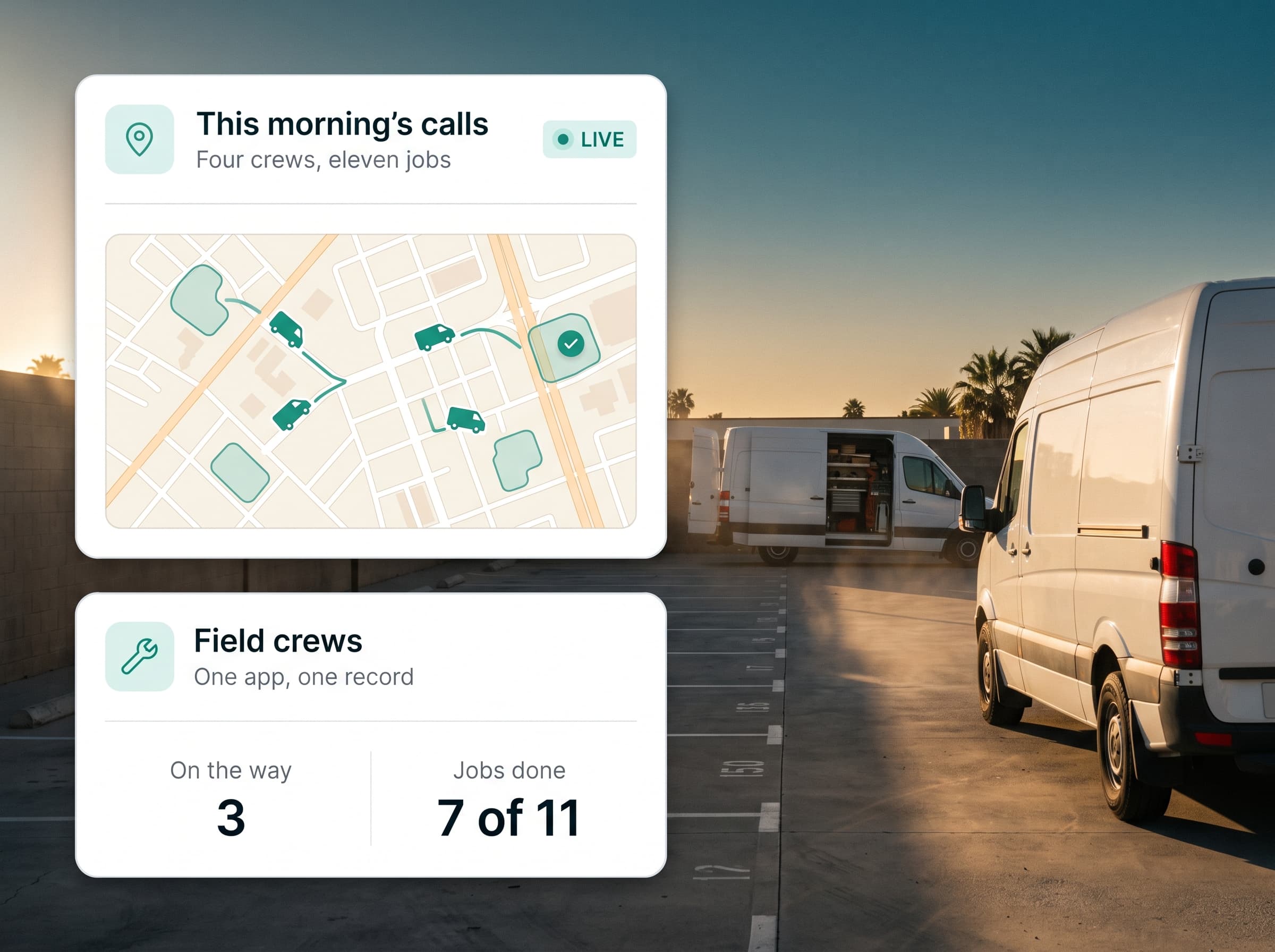
Assigned vehicle, today's jobs, navigation, and updates in a single place — adoption comes because it replaces phone calls and paperwork rather than adding to them.
Job checklists and vehicle checks with photo evidence land in the portal on submission, and defects route straight to the right desk instead of riding in a glovebox.
Office and field share the same conversation with history attached, so status chasing stops and there is a written record when questions arrive later.
Attendance and visit capture validate against the site's own geometry, turning a completed job report into a confirmed presence with a timestamp.
Dispatch
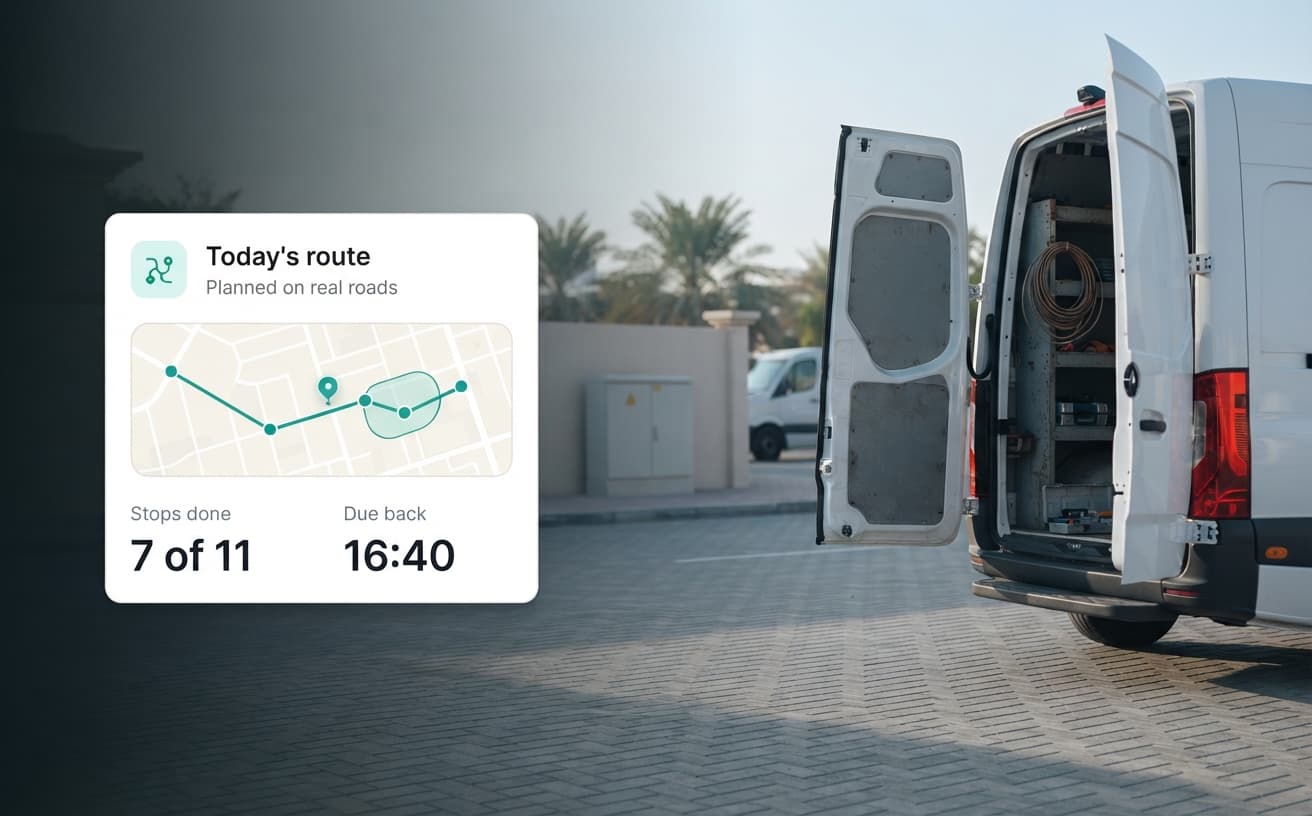
Drop the day's stops or reuse zones you already saved, and the route follows the actual road graph with distance broken out leg by leg — no straight lines cutting across blocks, and an existing round imports whole by KML. Once the van rolls, the trip grades itself against the telematics already arriving: arrival and dwell at each stop come from zone crossings, the driven track lays over the plan, and the completion estimate slides the moment a delay starts.
Learn more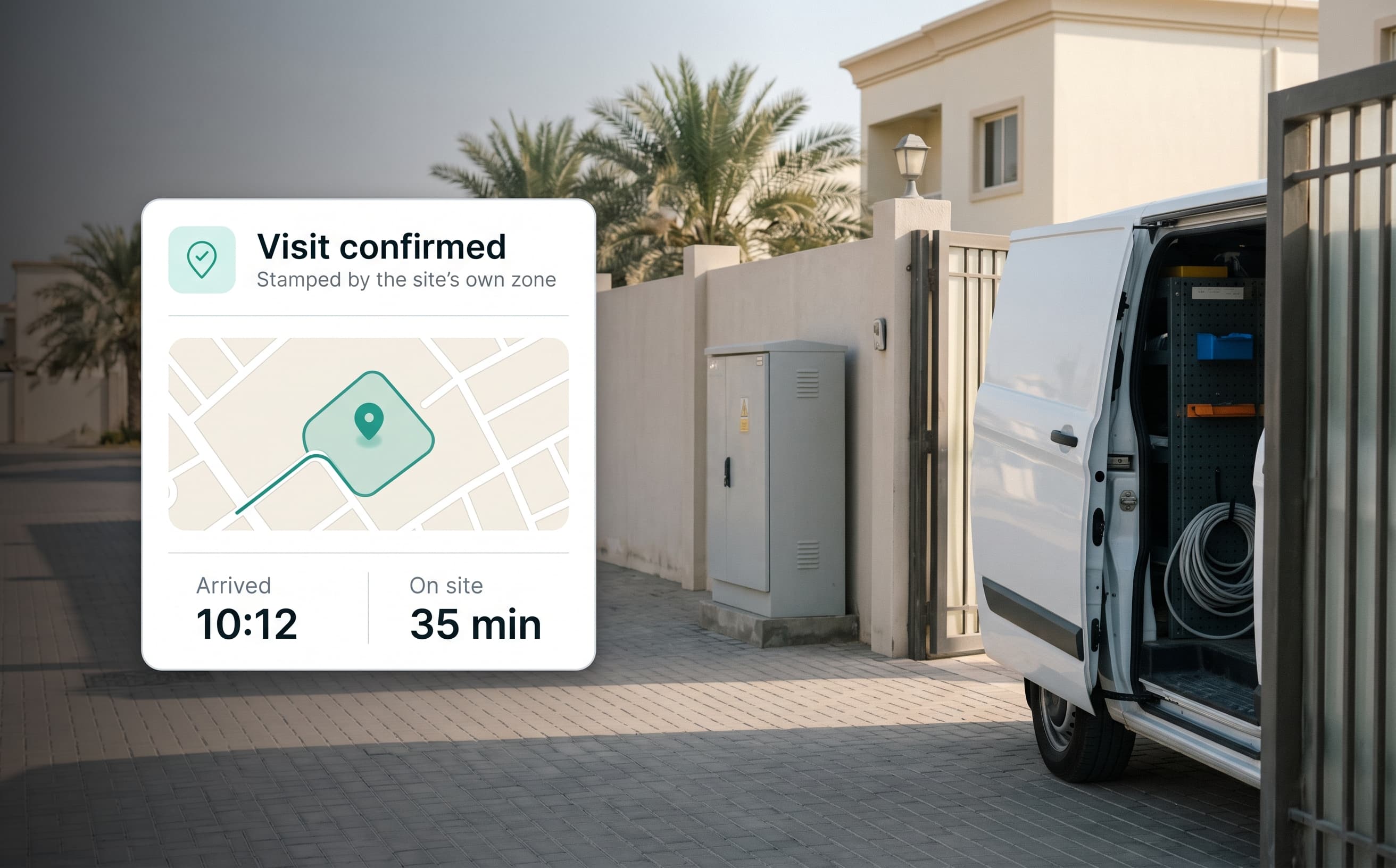
Proof of work
The engineer opens the app to today's jobs in the order they run, and one tap navigates to the next. The job's location is itself a geofence, so entering and leaving it stamps the arrival and the departure automatically — nobody types where they were, and time on site is a fact rather than a figure on a timesheet. Notes and the completion attach to that same record and file to the portal instantly.
Learn more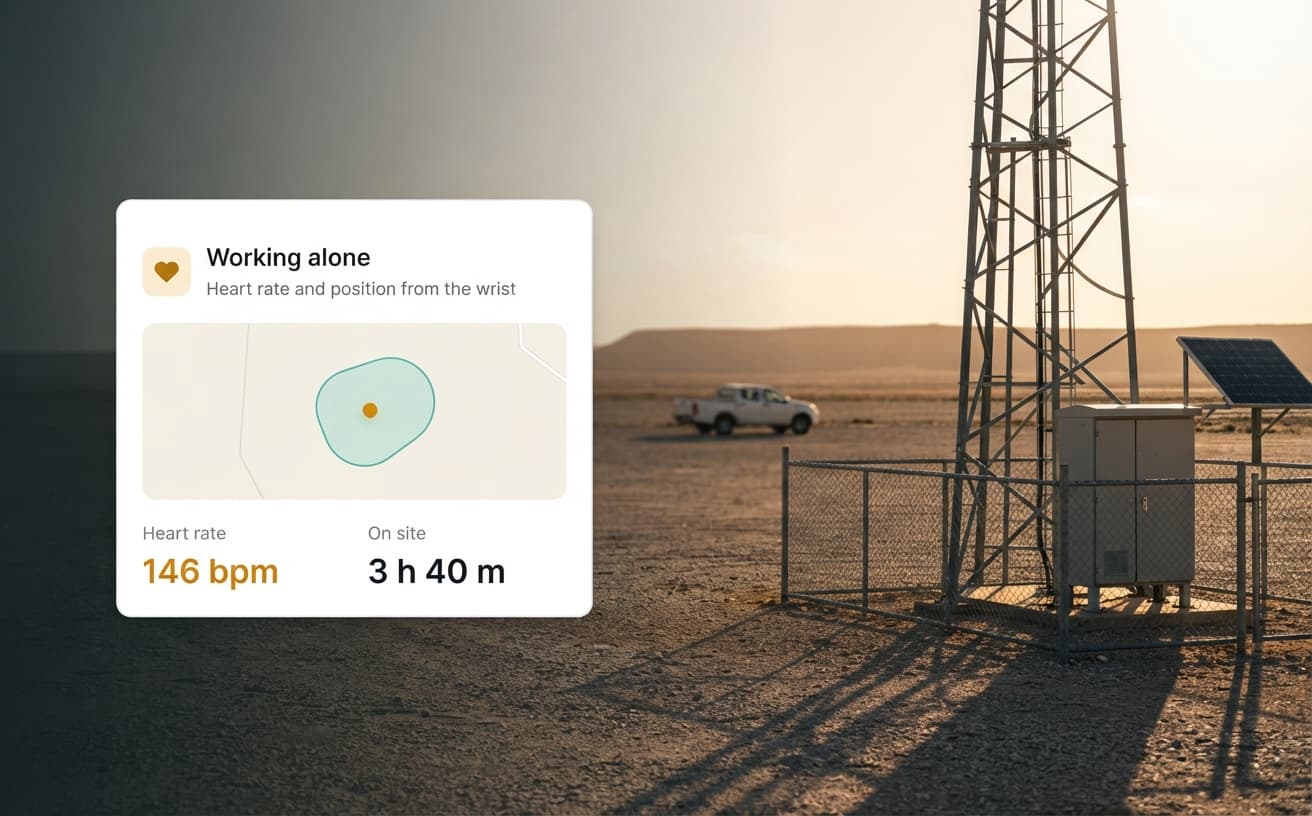
Duty of care
A wrist-worn device streams heart rate, steps, and position through the shift, so an engineer working alone on a remote site is not simply out of contact. A reading that climbs and stays high in the afternoon heat is visible while a supervisor can still act, and every wearer sits inside their assigned zone on one map — which answers the duty-of-care question with a record instead of a phone call.
Learn moreOperating realities
The operating realities a field-service platform has to survive.
01
Emergency call-outs, no-access visits, and overruns mean today's schedule is obsolete by mid-morning. Re-dispatch has to be a few taps, not a rebuild.
02
Basements, plant rooms, and rural sites drop connectivity, so job capture has to tolerate going offline and reconcile when it comes back.
03
Any tool that costs the engineer time gets worked around, so data quality is a function of whether the app is genuinely faster than paper.
04
If completion evidence is thin, invoices get queried and payment slows — which makes field capture a cash-flow issue, not a reporting one.
Products
Every capability below ships in the same portal, the same mobile app, and the same live data pipeline as the rest of your operation.
Jobs, navigation, and updates in one crew app.
See detailsPhoto evidence captured at the point of work.
See detailsCrew location and heart rate on the live map.
See detailsShifts, attendance, and zone-based task assignment.
See detailsLive van positions behind every dispatch decision.
See detailsImplementations
Solution pages go a level deeper: the contracts, the contractors, the regulator, and the stack assembled to run it.

Discuss your deployment
Sovereign-data-friendly. Enterprise multi-org architecture. Built to integrate with the devices, SIM providers, and back-office systems you already run.